What Turbidity Data Means in Real-Time Water Monitoring
Turbidity tells you more about your water than you might expect. This single measurement, which quantifies how cloudy or murky water appears, can signal everything from sediment runoff to microbial contamination. WATR gives water utilities and environmental consultants the ability to track turbidity around the clock, turning raw data into actionable insight before small changes become major incidents.
In this article, you'll learn what turbidity data actually measures, why it matters for incident detection, and what to look for in a monitoring system built for real-world conditions.
Key Takeaways: Turbidity Data and Real-Time Water Quality Monitoring
- Turbidity measures suspended particles in water, reported in Nephelometric Turbidity Units (NTU), and serves as an early indicator of contamination.
- High turbidity can shelter pathogens from disinfectants, making prompt detection essential for public health and aquatic ecosystems.
- Real-time monitoring systems detect sudden turbidity spikes within minutes, enabling faster incident response than grab sampling allows.
- WATR's solar-powered sensors deliver live turbidity readings through a cloud-based dashboard, eliminating the lag of laboratory analysis.
- Choosing a monitor with remote connectivity, smart alerts, and multi-parameter capability reduces site visits and accelerates environmental response times.
What Is Turbidity and How Is It Measured?
Turbidity is the optical clarity of water. It quantifies how much light scatters when it passes through a sample. The scattering happens because of suspended particles—clay, silt, algae, organic matter, or microscopic organisms—floating in the water column.
Sensors measure this scattering and express results in Nephelometric Turbidity Units (NTU). According to the U.S. Geological Survey, rivers during low-flow periods typically show turbidity below 10 NTU, while storm runoff can push readings far higher as sediment washes in from surrounding land.
Why does this number matter? Higher turbidity often correlates with higher pollutant loads because particles attract and carry metals, bacteria, and other contaminants.
Why Does Turbidity Data Matter for Water Quality?
Turbidity readings act as an early warning system. A sudden spike can indicate construction runoff, agricultural discharge, or upstream disturbances that introduce sediment and pollutants into waterways.
Elevated turbidity also creates biological risks. The U.S. Environmental Protection Agency notes that particles can shelter pathogens from disinfection, reducing the effectiveness of chlorine and other treatments. Removing turbidity has been linked to improved removal of protozoa and harmful microorganisms.
For aquatic life, cloudy water blocks sunlight and degrades habitat quality. Sedimentation can smother fish spawning beds and reduce biodiversity in lakes and rivers.
How Real-Time Monitoring Improves Incident Detection
Grab sampling—collecting a water sample and sending it to a lab—captures a single moment in time. Hours or even days can pass before results arrive, and by then conditions may have changed entirely. If a contamination event occurs between sampling intervals, it can go unnoticed until damage is done.
Real-time turbidity sensors solve this problem by taking readings at regular intervals, often every few minutes. When values exceed preset thresholds, alerts notify operators immediately. WATR delivers these alerts directly through its cloud-based dashboard, accessible on desktop and mobile devices, so your team can respond even when away from the site.
This approach shifts your monitoring posture from reactive to proactive. Instead of discovering a problem after the fact, you detect anomalies as they happen and trace their source before regulatory or environmental consequences escalate.
What to Look for in a Water Quality Monitor for Turbidity
Not all turbidity sensors perform equally in the field. When evaluating monitors, consider these factors:
Remote connectivity: Sensors equipped with GSM, LoRa, or satellite communication can transmit data from remote rivers, reservoirs, and coastal sites where wired infrastructure isn't practical. WATR supports all three telemetry protocols to ensure global reach.
Smart alerts: Configurable thresholds let you set alarm points for turbidity, dissolved oxygen, pH, and other parameters. Instant notifications reduce the time between event detection and response.
Multi-parameter capability: Turbidity alone doesn't tell the full story. Monitors that also measure dissolved oxygen, conductivity, and pH help you correlate data and pinpoint root causes faster. WATR's Smart Water Quality Monitor tracks multiple parameters simultaneously.
Power independence: Solar-powered devices run around the clock without relying on mains electricity, making them ideal for bankside deployments, agricultural ditches, and off-grid locations.
Common Applications for Turbidity Monitoring
Water utilities rely on turbidity data to protect drinking water supplies. Sudden increases can signal contamination events or filter failures, triggering automated backwash cycles or treatment adjustments.
Environmental consultants use turbidity trends to assess sediment transport, evaluate dredging impacts, and monitor restoration projects. Long-term datasets reveal seasonal patterns and help model watershed health.
Construction and mining sites must control sediment discharge to meet permit requirements. Real-time turbidity alerts help site managers respond quickly to stormwater runoff, reducing the risk of regulatory violations.
In aquaculture, stable turbidity supports fish health. High sediment loads can damage gills and reduce oxygen diffusion, so early detection protects stock and production schedules.
How WATR Supports Faster Environmental Response
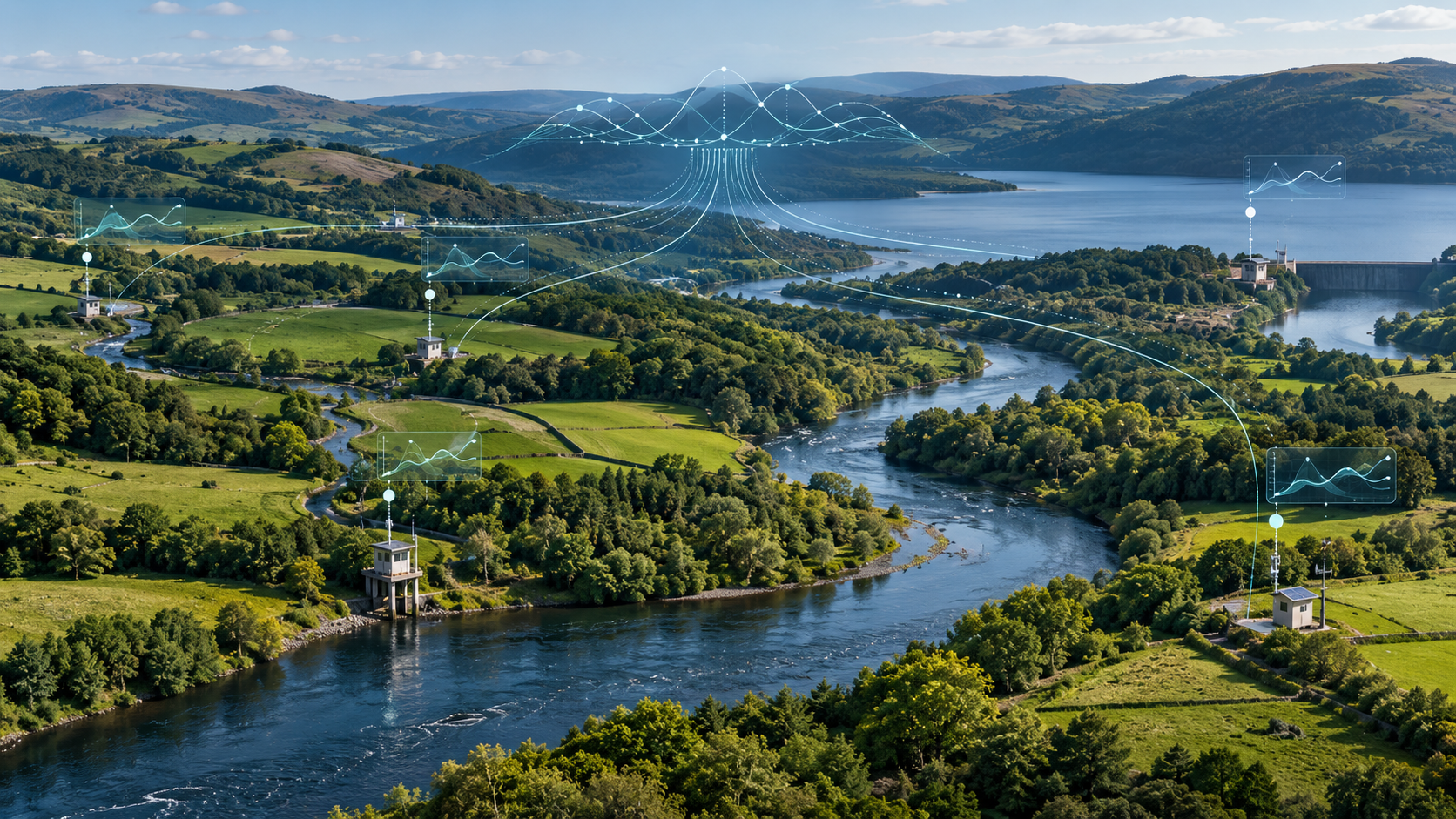
WATR's monitoring ecosystem connects sensors, dashboards, and alerts into a unified platform. You can compare turbidity readings across multiple locations, overlay historical data, and set custom thresholds for each site.
The Real-Time Data Dashboard visualises parameters at customer-defined intervals, allowing you to spot trends before they become incidents. Because WATR devices are solar-powered and self-contained, deployment requires minimal infrastructure, installation can happen in hours rather than days.
With API integration, your team can feed turbidity data into existing SCADA systems or AI-driven analytics platforms. This flexibility means WATR fits into your workflow, not the other way around.
In Conclusion: Using Turbidity Data to Protect Water Resources
Turbidity may be a single number, but its implications extend across public health, ecosystem integrity, and regulatory compliance. Real-time monitoring turns this number into a live indicator of water conditions, giving you the power to respond before small changes become headline-making incidents.
When you invest in a monitoring solution, look for remote connectivity, multi-parameter capability, and smart alerts that match your operational needs. WATR brings all of these together in a platform designed for the realities of fieldwork, robust hardware, reliable data transmission, and a dashboard that keeps you informed wherever you are.
FAQs about Turbidity Data and Real-Time Water Quality Monitoring
What does turbidity data indicate about water quality?
Turbidity measures suspended particles in water, including sediment, algae, and organic matter. High readings can signal pollution events, runoff, or microbial risk. WATR's sensors track turbidity in real time so you can identify changes the moment they occur.
How is turbidity measured in water?
Sensors shine light through a water sample and measure how much scatters at a 90-degree angle. Results are expressed in Nephelometric Turbidity Units (NTU). WATR's monitors automate this process with optical sensors calibrated for field accuracy.
Why is real-time turbidity monitoring important for incident detection?
Lab-based sampling creates gaps in your data. A contamination event can come and go before results arrive. Real-time monitoring detects spikes immediately and sends alerts, reducing response time from days to minutes. WATR delivers these alerts to your mobile device or desktop dashboard.
What turbidity levels are considered safe for drinking water?
Drinking water regulations typically require turbidity below 1 NTU, with tighter limits during treatment. Rivers and lakes often show higher natural variability. WATR's dashboard lets you set custom thresholds aligned with your local regulatory standards.
Can turbidity sensors work in remote locations without power access?
Yes. WATR's solar-powered monitors operate independently in off-grid environments. Combined with GSM, LoRa, or satellite telemetry, they transmit data from remote rivers, reservoirs, and construction sites without wired infrastructure.
Related posts

Get in touch
WATR has been designed to improve water quality around the world by providing an easy, accurate and a reliable way of monitoring water conditions, if you have any enquiries or questions please get in touch. Send us your specific requirements and we will get back to you as soon as possible.