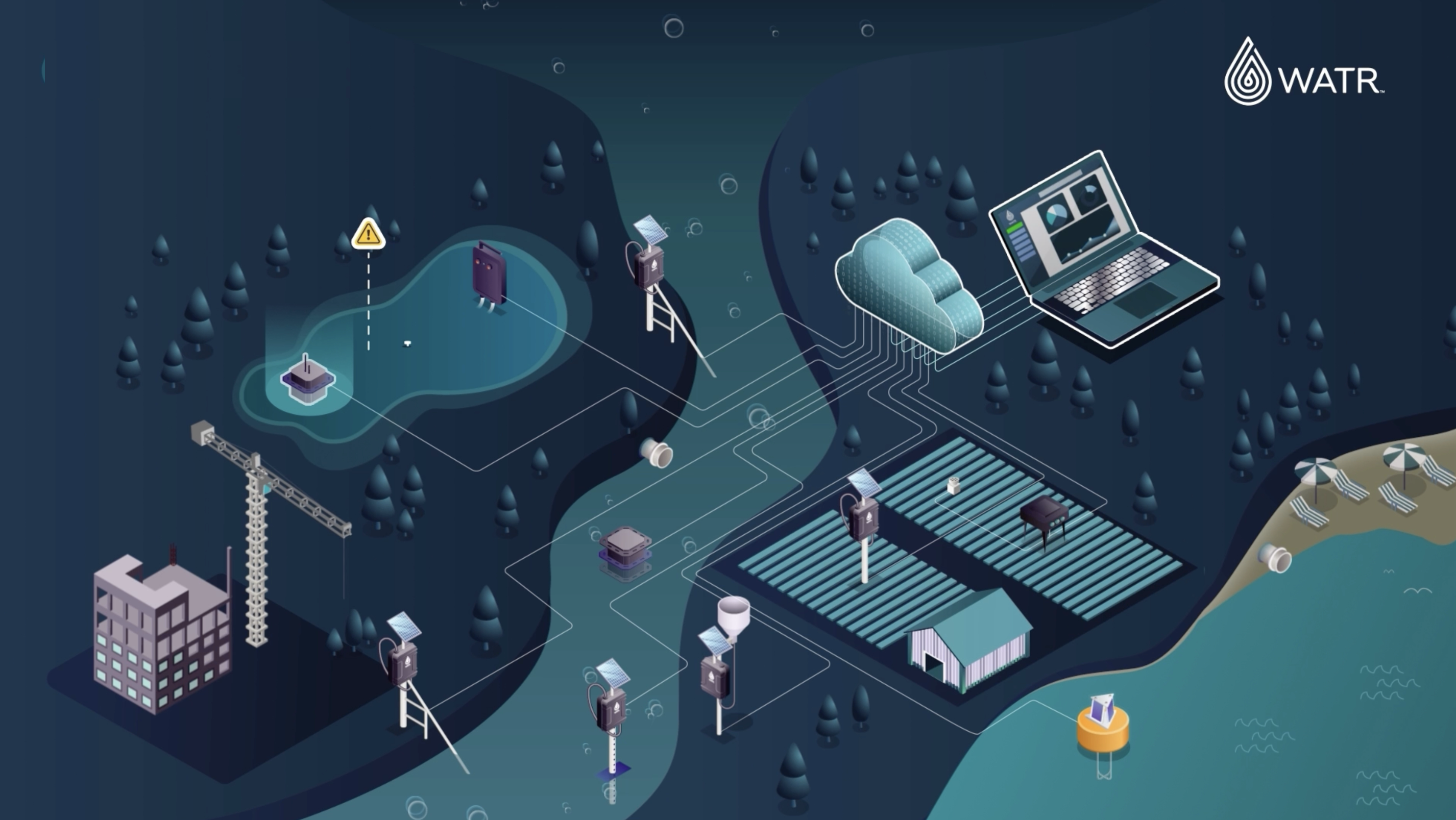
Smart Water Monitors for Industrial Discharge (2026)
Glyn CottonPublished
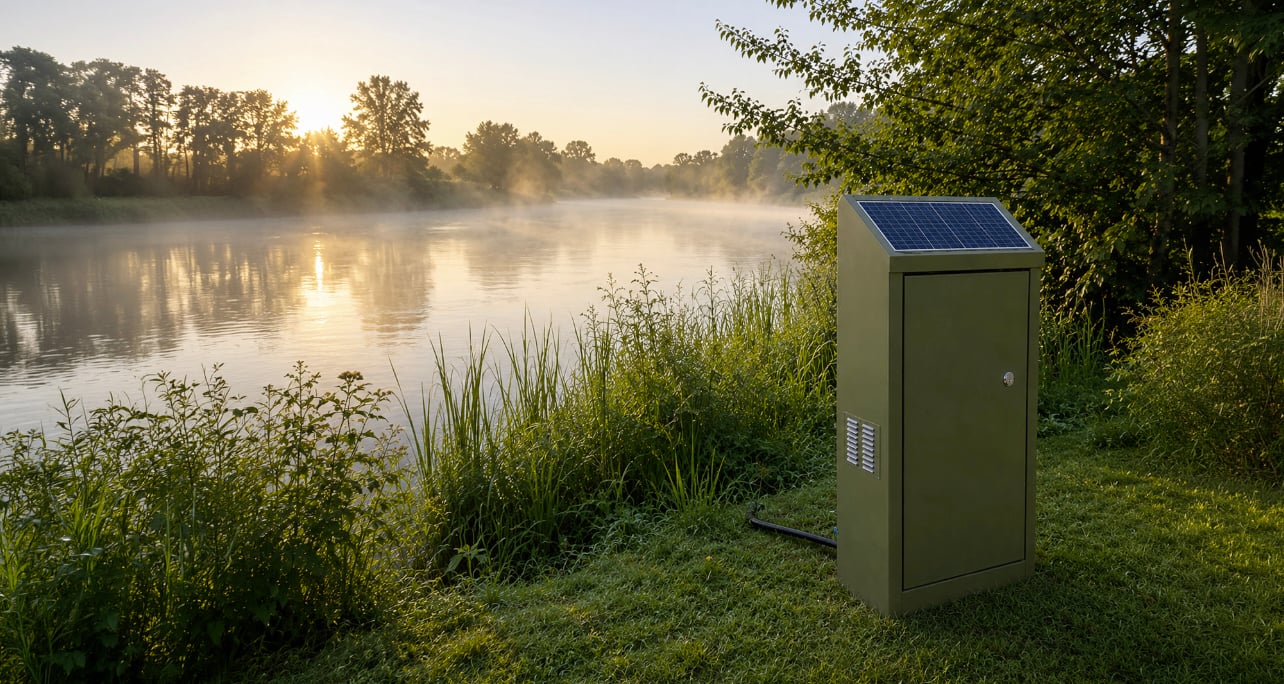
Specifying a smart water quality monitor for an industrial discharge point involves more than selecting a sensor from a catalogue. Environmental consultants face overlapping compliance requirements, site-specific parameter demands, and integration challenges that make monitor selection a multi-layered engineering decision.
This guide maps every stage of that decision, from regulatory parameter requirements and sensor technology options to deployment architecture, data integration, and long-term maintenance planning. By the end, you will have a structured framework for writing discharge-point monitoring specifications that hold up under regulatory scrutiny.
Key Takeaways: Smart Water Quality Monitors for Industrial Discharge
- Discharge monitoring specifications should start with the regulatory parameters required by your permit, not with sensor hardware.
- Sensor technology selection depends on the parameter range, expected fouling conditions, and calibration access at each discharge point.
- WATR provides a sensor-agnostic platform that connects to any sensor brand, simplifying multi-site discharge monitoring programmes.
- Real-time data dashboards with configurable alerts reduce the time between a threshold breach and a corrective response.
- Total cost of ownership analysis should include calibration, maintenance, telemetry, and data management alongside hardware costs.
Why Industrial Discharge Points Need Continuous Monitoring
Industrial discharge points are where treated or partially treated effluent enters a receiving watercourse. Regulators set strict limits on parameters such as pH, dissolved oxygen, turbidity, conductivity, ammonia and temperature at these locations. A single exceedance can trigger enforcement action, financial penalties, and reputational damage.
Periodic grab sampling captures a snapshot every few days or weeks. That approach misses transient pollution events, overnight spikes, and process upsets that occur between sampling visits. According to a 2025 review published in Environmental Monitoring and Assessment, low-frequency hydrochemical data routinely miss event-driven processes that continuous sensors detect within minutes.
Continuous monitoring closes this gap by providing a time-stamped, defensible record of discharge quality. It supports faster corrective action, more accurate compliance documentation, and stronger evidence during regulatory investigations.
What Regulatory Frameworks Require at Discharge Points?
Discharge monitoring requirements vary by jurisdiction, but several frameworks converge on a common set of parameters and data expectations.
Section 82 of the UK Environment Act 2021
Section 82 requires sewerage undertakers in England to continuously monitor water quality upstream and downstream of storm overflows and sewage disposal works. The mandated parameters include dissolved oxygen, temperature, pH, turbidity, and ammonia. Data must be recorded at least every 15 minutes during high-risk periods and published in near real-time. WATR's Section 82 monitoring solutions are designed to meet these requirements with solar-powered, connected hardware and automated compliance reporting.
US Clean Water Act and NPDES Permits
In the United States, the National Pollutant Discharge Elimination System (NPDES) sets facility-specific effluent limits. Continuous monitoring may be required for parameters such as pH, flow, dissolved oxygen, and specific pollutants identified in your permit. Data defensibility depends on time-stamped records, documented calibration, and approved analytical methods.
EU Water Framework Directive
The EU Water Framework Directive Annex V establishes ecological and chemical status monitoring. Continuous sensors provide the high-frequency data that classification assessments draw on. Discharge-point monitoring contributes to demonstrating that effluent quality does not compromise the receiving water body's target status.
Which Parameters Should You Specify for Discharge Monitoring?
Parameter selection starts with your permit conditions. Beyond the mandated minimums, several additional parameters can strengthen your monitoring programme and provide early warning of process upsets.
Core Physical and Chemical Parameters
Most discharge permits require a combination of pH, dissolved oxygen, conductivity, turbidity, and temperature. These five parameters form the baseline for assessing effluent quality and its potential impact on the receiving environment. Each parameter serves a distinct diagnostic function.
pH indicates the acidity or alkalinity of the discharge and influences the toxicity of metals and ammonia in the effluent. Dissolved oxygen reflects the biological oxygen demand your discharge places on the watercourse. Conductivity acts as a rapid proxy for total dissolved solids and can flag ionic contamination events. Turbidity tracks suspended solids and sediment load, while temperature affects chemical reaction rates and aquatic organism metabolism.
Nutrient and Toxicity Parameters
Ammonia monitoring is increasingly required because of its direct toxicity to aquatic life, particularly in low-flow receiving waters. Nitrate and phosphate monitoring supports eutrophication risk assessments. For industrial processes that generate specific contaminants, ion-selective electrodes or UV-based analysers can extend the parameter range without adding separate sampling infrastructure.
Supplementary Parameters for Risk-Based Monitoring
Depending on your discharge characteristics, ORP (oxidation-reduction potential), COD (chemical oxygen demand), chlorophyll-a, and hydrocarbon detection may add value. ORP reveals reducing conditions that mobilise metals from sediments. COD provides a continuous estimate of organic pollutant load. WATR's sensor range covers these supplementary parameters alongside the core compliance set.
How to Evaluate Sensor Technologies for Discharge Monitoring
Sensor selection is the technical core of a discharge monitoring specification. The technology you choose determines measurement accuracy, maintenance burden, calibration frequency, and long-term data quality.
Optical Sensors
Optical dissolved oxygen sensors use luminescent technology that requires no membranes or electrolytes. They do not consume oxygen during measurement, which makes them accurate in low-flow and stagnant conditions common at some discharge outfalls. Optical turbidity sensors using the 90-degree scatter method provide continuous suspended solids data without reagents.
Electrochemical Sensors
pH sensors using glass electrodes remain the standard for continuous pH measurement. Conductivity sensors track ionic strength and total dissolved solids. Ion-selective electrodes (ISEs) target specific ions such as ammonium, nitrate, and chloride. ISEs require more frequent calibration and are sensitive to temperature and interference from other ions present in the effluent matrix.
UV-Based Analysers
UV nitrate sensors measure nitrate concentration by UV absorption, avoiding the drift and maintenance demands of ISE-based nitrate measurement. UV254 absorbance provides a reagent-free estimate of COD. These analysers are suited to discharge points where organic load monitoring is a permit requirement.
Sensor-Agnostic Platform Advantages
A sensor-agnostic monitoring platform allows you to select sensors from any manufacturer based on technical performance rather than proprietary lock-in. WATR operates as a sensor-agnostic ecosystem, enabling environmental consultants to specify sensors matched to each discharge point's unique conditions while maintaining a unified data platform across all monitoring locations.
What Deployment Architectures Work at Industrial Discharge Points?
Deployment architecture determines how sensors interact with the discharge stream, how data travels from the monitoring location to your dashboard, and how maintenance access is managed over time.
In-Situ (Floating or Submerged) Deployment
In-situ sensors are deployed directly in the discharge channel or the receiving watercourse near the outfall. Floating platforms such as the WATR Pro provide flexible positioning and can be repositioned as monitoring priorities shift. Submerged sensors in stilling tubes or protective housings suit bankside installations where floating platforms are impractical.
Flow-Through (Pumped Kiosk) Deployment
Pumped systems draw a continuous sample from the discharge channel into a land-based enclosure where sensors operate under controlled conditions. This architecture suits high-sediment environments, locations where direct water access is restricted, or sites requiring sample conditioning before measurement. The WATR Pumped Kiosk provides a cost-effective flow-through option with continuous monitoring and cloud connectivity.
Bankside Deployment
Bankside systems mount sensors on a fixed structure at the water's edge, with probes lowered into the watercourse via stilling tubes or counterlevered arms. This approach supports increased solar capacity and battery storage compared to floating platforms, enabling higher data collection frequency and support for larger sensor arrays. WATR Bankside configurations offer rapid installation with minimal infrastructure requirements.
How Should You Specify Power and Connectivity?
Industrial discharge points are often located in areas with limited mains power and variable cellular coverage. Your specification must account for autonomous power generation and resilient telemetry.
Power Options for Remote Discharge Points
Solar-powered monitoring units operate independently of mains electricity, making them suited to remote outfalls, field-based discharge channels, and sites where trenching power cables would be disruptive or cost-prohibitive. Battery storage paired with solar panels provides continuous operation through low-light conditions. The power budget depends on the number of sensors, measurement frequency, and telemetry interval.
Telemetry and Communication Protocols
GSM cellular connectivity suits sites with mobile network coverage and provides sufficient bandwidth for high-frequency data transmission. LoRaWAN offers lower power consumption and longer range for sites at the edge of cellular coverage. Satellite connectivity serves remote or offshore discharge points where neither GSM nor LoRa networks are available. WATR supports all three protocols, allowing consultants to specify the communication method best suited to each site's conditions.
How to Integrate Discharge Monitoring Data with Existing Systems
Monitoring data is only operationally useful when it reaches the people and systems that act on it. Your specification should define how data flows from sensor to decision-maker.
Cloud-Based Dashboards and Alert Configuration
A centralised cloud-based dashboard provides 24/7 visibility across all connected monitoring locations. Configurable alerts notify operators when parameters breach predefined thresholds, enabling rapid incident response before an exceedance becomes an enforcement event. Historical data visualisation supports trend analysis and long-term compliance reporting.
API Integration for Third-Party Platforms
Open API access allows monitoring data to flow into GIS platforms, business intelligence tools, AI-driven analytics engines, and existing SCADA systems. This integration capability is critical for environmental consultancies managing monitoring data across multiple client sites. WATR's Pulse API provides programmatic access to monitoring data for custom integrations and automated reporting workflows.
Automated Compliance Reporting
Automated reporting tools transform raw sensor data into regulatory-ready documentation. Time-stamped records with embedded calibration data produce an auditable trail that strengthens defensibility during regulatory investigations. This reduces the administrative burden on environmental teams and minimises the risk of gaps in compliance documentation.
What Does a Discharge Monitoring Maintenance Plan Look Like?
A monitoring specification that ignores maintenance planning will fail in the field. Sensor accuracy degrades without regular calibration, and biofouling can compromise optical measurements within days in nutrient-rich discharge environments.
Calibration Schedules and Verification Protocols
Each sensor type has a specific calibration interval influenced by the discharge environment. pH sensors require buffer verification at regular intervals. Dissolved oxygen sensors using optical technology have inherently longer calibration intervals because they have no membrane to drift. Turbidity sensors need verification against standard solutions, particularly in high-sediment conditions. Your specification should define calibration frequency, responsible personnel, and acceptance criteria for each parameter.
Anti-Fouling and Cleaning Requirements
Biofouling is the primary cause of data quality degradation in continuous water quality monitoring. Self-cleaning wipers on optical sensors extend maintenance intervals significantly. Pumped kiosk systems can include automated cleaning sequences. Specify the anti-fouling mechanisms required for each sensor and the maximum interval between manual cleaning visits based on site conditions.
Spare Parts and Service-Level Agreements
Continuous monitoring creates a dependency on sensor availability. Your specification should address spare sensor stock, expected lead times for replacements, and whether the monitoring provider includes ongoing maintenance and calibration services within the deployment agreement. A full-service model that covers calibration, maintenance, data analysis, and consultancy reduces the operational burden on your team.
How to Build a Specification Document for Discharge Monitoring
A well-structured specification document ensures that suppliers respond to a consistent scope and that the selected system meets your operational and compliance requirements from day one.
Step 1: Define Monitoring Objectives
Start with the decision the monitoring data must support. Is the primary objective permit compliance, process optimisation, environmental impact assessment, or a combination? The objective determines parameter selection, measurement frequency, data latency tolerance, and reporting format.
Step 2: Map Permit Requirements to Parameters and Ranges
For each discharge point, list the parameters required by your permit along with the minimum, normal, and peak concentration ranges. Specify the required measurement frequency. Include any supplementary parameters that support operational decision-making beyond the permit minimums.
Step 3: Specify Site Conditions and Deployment Architecture
Document the physical characteristics of each monitoring location, including water depth, flow velocity, access conditions, power availability, and cellular coverage. These details determine whether an in-situ, bankside, or pumped kiosk architecture is appropriate.
Step 4: Define Data Management and Integration Requirements
Specify how data should be delivered: cloud dashboard, API feed, SCADA integration, or a combination. Define alert thresholds, reporting intervals, data export formats, and user access requirements. Include data retention and backup policies.
Step 5: Establish Maintenance and Service Expectations
Specify calibration intervals, maximum permitted data gaps, expected sensor replacement schedules, and the responsibilities of each party. If you require a full-service model including installation, calibration, maintenance, and data consultancy, document that scope explicitly.
How to Evaluate Total Cost of Ownership for Discharge Monitoring
Comparing monitoring systems on hardware cost alone leads to poor specification decisions. Total cost of ownership (TCO) over a three-to-five-year horizon provides a more accurate basis for comparison.
Capital vs. Operational Expenditure Models
Outright hardware purchase (CAPEX) suits organisations with capital budgets and in-house maintenance capability. Subscription and Data-as-a-Service (DaaS) models convert the investment into operational expenditure, bundling hardware, telemetry, maintenance, and data access into a recurring fee. WATR offers both CAPEX and OPEX-aligned models, along with a rental partnership through Sunbelt Rentals for project-based deployments.
Hidden Cost Drivers in Discharge Monitoring
Calibration consumables, field labour for sensor cleaning, reagent replacement for wet-chemistry analysers, data storage fees, and unplanned sensor replacements often exceed the original hardware cost within two years. Sensor technologies that minimise reagent consumption and extend calibration intervals, such as optical dissolved oxygen and UV-based analysers, reduce these ongoing costs substantially.
Building a TCO Comparison Model
Structure your TCO model around these line items per monitoring location per year: hardware amortisation, sensor replacement and calibration, field labour (cleaning and maintenance visits), telemetry and data platform fees, reagents and consumables, and compliance reporting labour. Comparing two or three architectures across these categories reveals the true cost difference.
What Common Specification Mistakes Should You Avoid?
Environmental consultants writing discharge monitoring specifications repeatedly encounter the same pitfalls. Recognising these patterns early saves time and protects the integrity of the monitoring programme.
Over-Specifying Parameters
Specifying parameters that are not required by the permit and do not support operational decisions increases sensor count, maintenance burden, and cost without proportional benefit. Start with the permit-mandated set and add supplementary parameters only where a clear operational or risk-management case exists.
Underestimating Fouling Conditions
Discharge environments are often high in nutrients, sediment, and organic matter. Optical sensors without anti-fouling mechanisms can drift within days, producing unreliable data between maintenance visits. Specify self-cleaning capabilities and define maximum maintenance intervals based on site-specific fouling potential.
Ignoring Data Integration Requirements
A monitoring system that generates data in a proprietary format or lacks API connectivity creates data silos. Specify open data protocols and API access at the procurement stage to avoid costly integration work later. WATR's open data dashboard with API integration ensures monitoring data connects with AI models, GIS platforms, and existing business intelligence systems from day one.
In Conclusion: How to Specify Smart Monitors That Deliver Compliance and Operational Value
Specifying smart water quality monitors for industrial discharge points is a structured engineering exercise, not a product selection task. Start with the regulatory requirements at each discharge location, map those to sensor technologies and deployment architectures, and define the data management, maintenance, and cost frameworks that sustain the programme over its operational life.
Environmental consultants who follow this specification approach produce monitoring programmes that deliver defensible compliance data, faster incident response, and stronger environmental protection at every discharge point.
FAQs about Smart Water Quality Monitors for Industrial Discharge
What parameters are required for industrial discharge monitoring?
The required parameters depend on your specific permit conditions. Most discharge permits mandate pH, dissolved oxygen, conductivity, turbidity, and temperature as a minimum. Additional parameters such as ammonia, nitrate, and COD may be required depending on your industry sector and the sensitivity of the receiving watercourse.
How does a sensor-agnostic platform benefit discharge monitoring?
A sensor-agnostic platform allows you to select sensors from any manufacturer based on technical performance at each monitoring location. WATR operates as a sensor-agnostic ecosystem, meaning you can combine sensors optimised for different discharge conditions while maintaining unified data access through the Pulse Dashboard and API.
What is Section 82 and how does it affect discharge monitoring?
Section 82 of the UK Environment Act 2021 requires sewerage undertakers to continuously monitor water quality near their discharge assets. Mandated parameters include dissolved oxygen, temperature, pH, turbidity, and ammonia. WATR's monitoring solutions meet these requirements with solar-powered hardware, real-time alerts, and automated compliance reporting.
How often do discharge monitoring sensors need calibration?
Calibration frequency varies by sensor technology and discharge environment. Optical dissolved oxygen sensors have longer intervals because they contain no membranes to drift. pH glass electrodes require regular buffer verification. Your specification should define calibration schedules for each parameter based on manufacturer guidance and site-specific conditions.
What is the difference between CAPEX and DaaS models for monitoring?
CAPEX models involve purchasing hardware outright, suited to organisations with capital budgets and in-house maintenance teams. Data-as-a-Service models from providers like WATR convert the investment into operational expenditure, bundling hardware, data access, maintenance, calibration, and support into a recurring fee that reduces upfront cost and transfers maintenance responsibility.
Can discharge monitoring data integrate with existing SCADA systems?
Monitoring platforms with open API access and standard communication protocols connect to SCADA, GIS, and business intelligence systems. WATR's Pulse API provides programmatic data access that enables integration with existing operational technology infrastructure, ensuring discharge data feeds directly into your centralised control systems.
Related posts


Get in touch
WATR has been designed to improve water quality around the world by providing an easy, accurate and a reliable way of monitoring water conditions, if you have any enquiries or questions please get in touch. Send us your specific requirements and we will get back to you as soon as possible.