How to Build Water Quality Testing Protocols in 2026
 Nick ThompsonPublished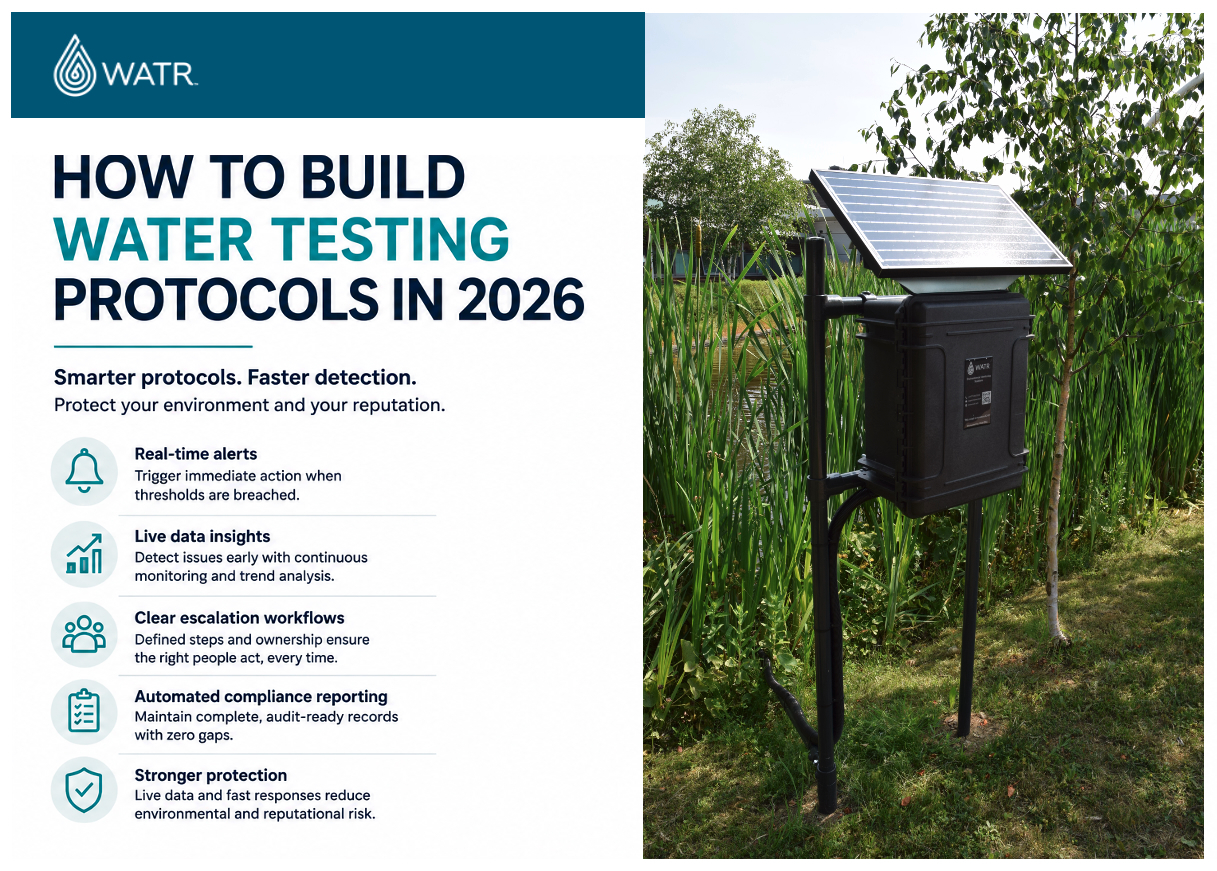
Key Takeaways: How to Build Water Testing Protocols in 2026
- Effective water testing protocols depend on defined parameters, clear escalation workflows, and real-time alerts that trigger immediate action.
- WATR's sensor-agnostic platform enables environmental teams to deploy monitoring across diverse sites while integrating data into a single dashboard.
- Protocol weaknesses often stem from infrequent sampling, undefined thresholds, and unclear ownership of response actions during pollution events.
- Automated compliance reporting removes the risk of gaps in documentation and supports defensible records during regulatory investigations.
- Building protocols around live data rather than periodic snapshots enables faster interventions and reduces the likelihood of fines and reputational harm.
What Is a Water Testing Protocol?
A water testing protocol is a documented set of procedures that defines what parameters you measure, how often you measure them, what thresholds trigger action, and who is responsible for responding. It forms the backbone of any environmental monitoring programme.
Without a clear protocol, teams collect data without knowing what to do with it. Measurements sit in spreadsheets or databases while pollution events unfold unnoticed. A strong protocol turns raw numbers into actionable intelligence.
The goal is not just data collection. The goal is faster detection, confident decision-making, and evidence that stands up to regulatory scrutiny.
Why Do Monitoring Programmes Miss Pollution Events?
Many monitoring programmes fail because they rely on infrequent grab samples taken at set intervals. If a discharge or runoff event happens between sampling windows, it goes undetected until downstream damage is already done.
Another common issue is unclear thresholds. Teams may track dissolved oxygen or pH, but without predefined limits and escalation steps, abnormal readings are logged rather than acted upon. This creates a paper trail that shows the incident occurred but also shows no one responded in time.
Ownership gaps compound the problem. When multiple departments share responsibility for water quality, nobody may own the response. A spike in turbidity might be visible to an operator, but if the protocol does not specify who must act, delays are inevitable.
How to Define the Parameters That Matter
Start by identifying the pollutants and conditions most relevant to your site. For catchment monitoring, this often includes ammonia, nitrate, dissolved oxygen, pH, conductivity, and turbidity. For construction sites, sediment load and hydrocarbons may take priority.
Align your parameter list with regulatory requirements. In the UK, Section 82 monitoring specifies ammonia, ammonium, dissolved oxygen, pH, temperature, and turbidity. Your protocol should cover these as a baseline, then add site-specific parameters based on local risk factors.
Consult your sensor options to confirm you can measure the parameters you need. Modern sensor-agnostic platforms let you mix probe types from different manufacturers, so you are not locked into a single vendor's ecosystem.
How to Set Alert Thresholds and Escalation Workflows
Thresholds define when a measurement crosses from normal into concerning. Set them based on regulatory limits, permit conditions, and historical baseline data from your site. If dissolved oxygen routinely sits at 8 mg/L and your permit floor is 5 mg/L, you might set an early-warning threshold at 6.5 mg/L to give yourself time to respond before a breach.
Escalation workflows assign responsibility at each stage. A first-tier alert might notify an on-site technician. A second-tier alert, triggered if the parameter continues to decline, might escalate to an environmental manager. A third-tier alert could activate automated controls such as aerators or filtration systems.
Document every step in writing. During an investigation, regulators will ask to see your escalation procedures and the timestamps showing when each action was taken. If your protocol is vague, your records will be too.
What Role Does Real-Time Data Play in Pollution Detection?
Real-time data closes the gap between incident and response. Instead of waiting days for lab results, you see parameter changes as they happen. If ammonia spikes at 2 a.m., an alert reaches the right person immediately, not the following week.
This speed matters for incident containment. A small discharge caught early may be remediated before it spreads downstream. The same discharge discovered after 48 hours may already have triggered fish kills or contaminated drinking water intakes.
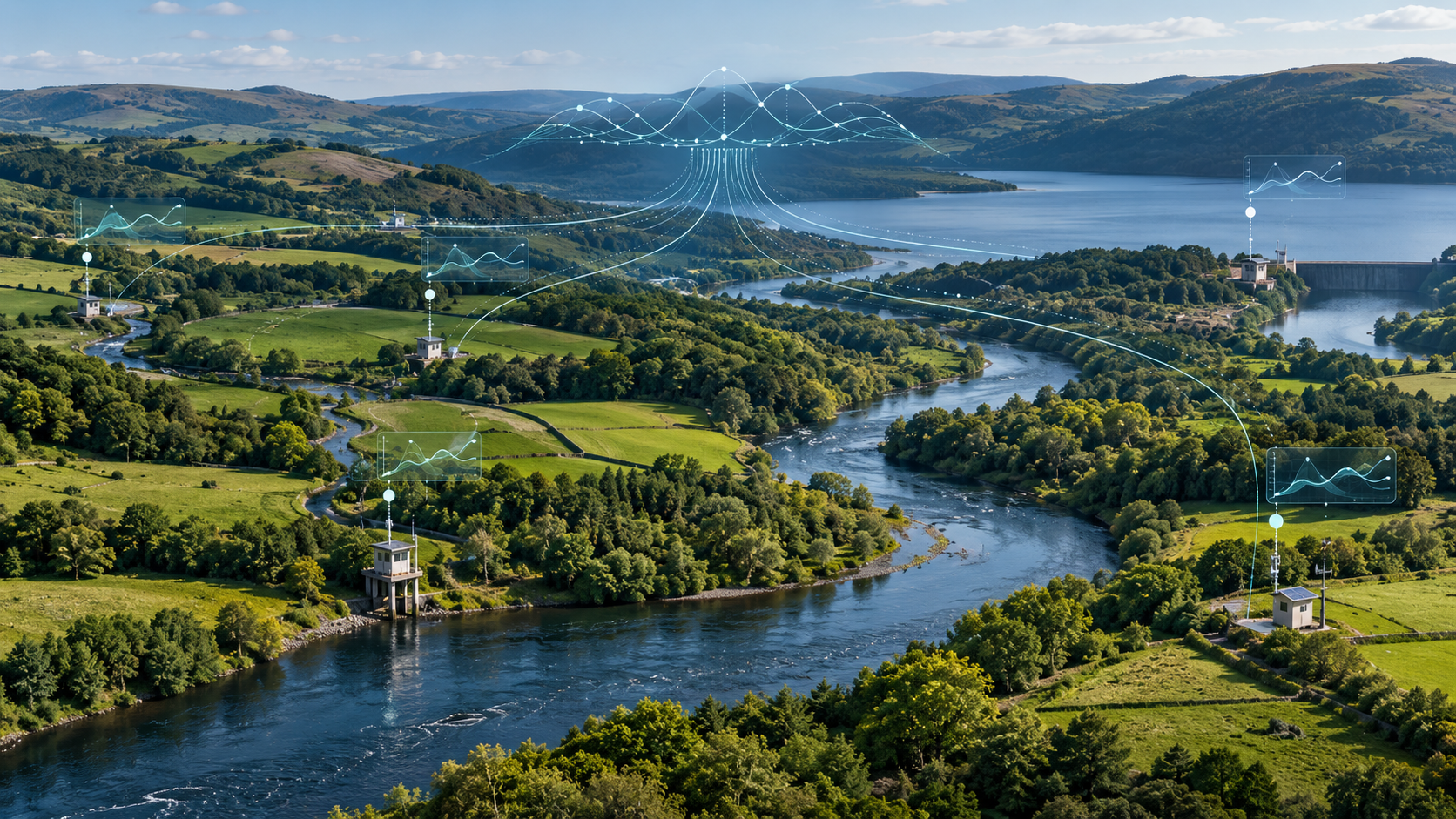
WATR's cloud-based dashboard delivers 24/7 visibility across all connected monitoring units. Teams can view historical trends, compare sites, and configure alerts that match their escalation workflows.
How to Structure Your Sampling Frequency
Sampling frequency should match the risk profile of your site. High-risk locations, such as outfalls downstream from industrial discharge points, may need hourly or sub-hourly measurements. Lower-risk stretches may be adequately covered with four-hour intervals.
Avoid one-size-fits-all schedules. A single frequency across an entire catchment will over-sample low-risk areas and under-sample high-risk areas. Tiered frequency, adjusted site by site, makes better use of resources.
Consider increasing frequency during known risk periods. Heavy rainfall events mobilise pollutants from agricultural land and construction sites. Storm overflow events push untreated wastewater into watercourses. Protocols should specify when to shift from routine monitoring to incident mode.
How to Design Clear Ownership and Accountability
Every protocol needs named roles. Identify who reviews incoming data, who authorises response actions, and who reports to regulators. Avoid generic assignments like "the environmental team." Instead, specify "the on-call duty officer" or "the site environmental manager."
Define backup responsibilities. If the primary responder is unavailable, who takes over? Protocols that rely on a single person create bottlenecks and single points of failure.
Include contact details and escalation timelines. If the first responder does not acknowledge an alert within 30 minutes, the system should automatically escalate to the next level. WATR's smart alerts support this kind of tiered notification structure.
How to Integrate Automated Compliance Reporting
Compliance reporting often consumes significant staff time. Teams export data, format it into spreadsheets, cross-reference permit conditions, and manually compile reports for regulators. This process introduces transcription errors and delays.
Automated reporting extracts data directly from your monitoring platform, applies the relevant permit limits, and generates ready-to-submit documentation. You maintain an audit trail that shows exactly when each measurement was taken and what actions followed.
WATR's platform includes automated compliance reporting as a core feature. This helps utilities, consultancies, and construction firms demonstrate ongoing compliance without manual data wrangling.
How to Handle Protocol Updates and Version Control
Your protocol should be a living document. Regulatory requirements change, site conditions evolve, and lessons learned from incidents should feed back into improved procedures.
Establish a review schedule, typically annual, and specify who has authority to approve changes. Maintain version control so you can demonstrate which protocol was in effect at any given time. This protects you during audits and investigations.
When you update thresholds, escalation steps, or sampling frequencies, communicate the changes to everyone affected. A protocol that exists only in a shared drive folder, unread by field staff, is not a protocol at all.
What Common Mistakes Should You Avoid?
One frequent mistake is setting thresholds too close to permit limits. This leaves no buffer for response. By the time an alert fires, you may already be in breach. Build in early-warning thresholds that give you time to intervene.
Another mistake is treating all parameters equally. Some readings, like dissolved oxygen, can change rapidly and have immediate ecological consequences. Others, like conductivity, tend to shift more slowly. Weight your alert priorities accordingly.
Avoid over-reliance on a single measurement point. Pollution plumes move, dilute, and disperse. A single sensor may miss an event entirely if the plume passes a few metres away. Deploy sensors upstream and downstream of risk points to catch events as they propagate.
How to Build Protocols That Scale Across Multiple Sites
If you manage monitoring across a catchment, a region, or multiple client sites, your protocols need to scale. Standardised templates reduce training time and ensure consistent quality, but each site needs local calibration.
Use a modular approach. Define a core protocol structure, such as threshold logic and escalation steps, at the organisational level. Then allow site-specific appendices that cover local parameters, risk factors, and contact details.
Centralised dashboards help you manage complexity. WATR's environmental monitoring ecosystem lets you view data from multiple sites in a single interface, compare trends, and standardise alert configurations across your network.
How Real-Time Monitoring Strengthens Regulatory Confidence
Regulators increasingly expect live data, not periodic snapshots. In the UK, the Environment Agency's Storm Overflow Assessment Framework and evolving Section 82 requirements reflect this shift. Organisations that can demonstrate 24/7 monitoring and rapid incident response are better positioned during inspections and enforcement actions.
Live data also supports proactive engagement. If you detect an upstream pollution event before it reaches your intake or discharge point, you can alert regulators yourself rather than waiting for them to discover it. This builds trust and often results in more favourable treatment during enforcement.
A 2025 study published in Environmental Monitoring and Assessment found that high-frequency monitoring enabled earlier detection of water quality shifts and improved the reliability of compliance assessments compared to grab sampling alone.
In Conclusion: Building Protocols That Detect, Respond, and Protect
Effective water testing protocols are not about collecting more data. They are about collecting the right data, at the right frequency, with clear ownership and defined response pathways.
Start with the parameters that matter most to your regulatory obligations and site-specific risks. Set thresholds that give you time to act. Assign clear ownership at every escalation tier. Automate compliance reporting to remove transcription errors and manual delays.
Move from periodic snapshots to live intelligence. WATR's sensor-agnostic platform, real-time hardware, and automated alerting help environmental teams detect pollution events faster, respond with confidence, and demonstrate compliance to regulators. The result is stronger environmental protection and reduced risk of fines, delays, and reputational harm.
FAQs About How to Build Water Testing Protocols in 2026
What parameters should a water testing protocol include?
At minimum, cover parameters required by your permits and local regulations. Common choices include dissolved oxygen, pH, ammonia, turbidity, and temperature. Add site-specific parameters based on your risk assessment. WATR supports a wide sensor range, letting you tailor monitoring to your exact needs.
How often should I sample water quality?
Sampling frequency depends on site risk. High-risk outfalls may need hourly readings, while lower-risk stretches can use longer intervals. Increase frequency during storm events or known risk periods. WATR's remote frequency adjustment lets you switch between routine and incident modes without site visits.
What triggers a pollution alert?
Alerts fire when a parameter crosses a predefined threshold. Set thresholds below permit limits to give yourself response time. WATR's smart alerts support tiered escalation, notifying different team members at different severity levels.
Who should own the response to a water quality incident?
Name specific roles in your protocol, not generic teams. Include backup assignments and contact details. WATR's notification system can route alerts to multiple recipients and escalate automatically if the first responder does not acknowledge.
How does automated compliance reporting work?
Automated systems pull data directly from your monitoring platform, apply permit conditions, and generate regulatory-ready reports. This removes manual data entry and reduces transcription errors. WATR includes automated compliance reporting as a core platform feature.
Can I use sensors from different manufacturers in one protocol?
Yes. Sensor-agnostic platforms accept probes from multiple vendors, so you can choose the right sensor for each parameter. WATR's sensor-agnostic design ensures compatibility with existing equipment and future upgrades.
Related posts

Get in touch
WATR has been designed to improve water quality around the world by providing an easy, accurate and a reliable way of monitoring water conditions, if you have any enquiries or questions please get in touch. Send us your specific requirements and we will get back to you as soon as possible.