WATR Partners with UWE Bristol on Innovative River Monitoring Project to Transform UK Water Quality Assessment
Transforming River Health Monitoring with Intelligent Sensing Networks
Client: UWE Bristol (University of the West of England)
Partner: WATR
Project: MaD-OPS (Monitoring and Detection of Organic Pollution from Sewage)
The Challenge
Rivers across the UK are in poor ecological condition following decades of environmental pressure, over- extraction, and pollution from multiple sources including sewage, agriculture, road runoff, and industry.
A major contributor is the widespread use of Combined Sewer Overflow (CSO) systems. Originally designed as emergency relief mechanisms, these systems are now routinely discharging untreated sewage into rivers due to population growth and infrastructure limitations.
At the same time, regulatory requirements are evolving. Section 82 of the UK’s continuous water quality monitoring programme now mandates monitoring both upstream and downstream of all CSO discharge points. However, current monitoring frameworks rely heavily on a narrow set of physicochemical parameters, such as dissolved oxygen, turbidity, pH, conductivity, and ammonia, which provide only limited insight into overall river health.
Traditional biological monitoring methods, including macroinvertebrate and faecal coliform sampling, are based on infrequent spot sampling. This approach often fails to capture transient pollution events and does not reflect the dynamic nature of river ecosystems.
There is a clear need for a more advanced, continuous, and biologically informed approach to understanding rivers as living systems.
The Solution
The MaD-OPS project was developed to address these challenges by combining cutting-edge sensing technologies with integrated data analysis.
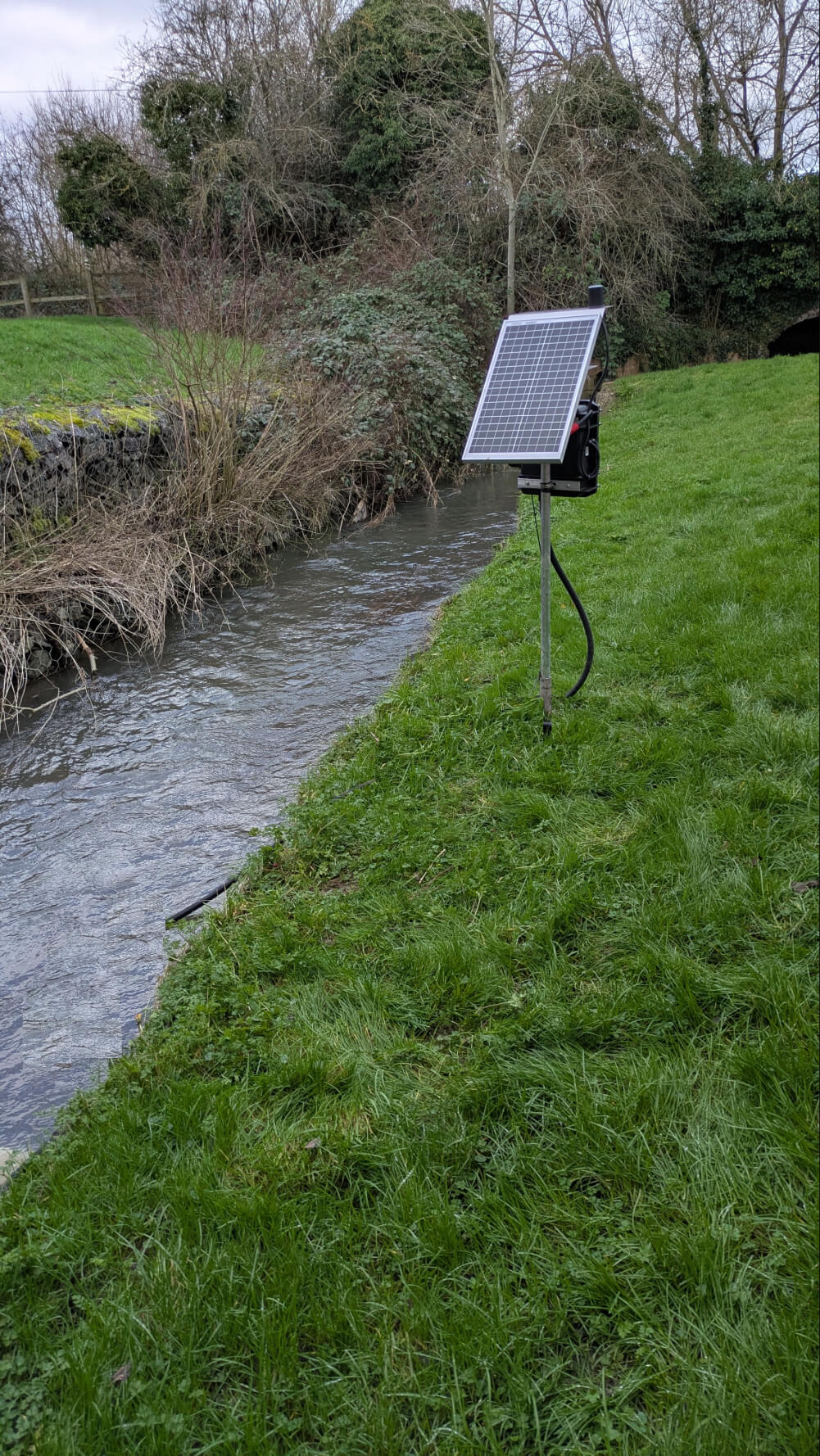
Funded by UKRI and NERC, and delivered in partnership with UWE Bristol, Chelsea Technologies, and The Rivers Trust, the project deploys a network of advanced fluorescence-based optical sensors. These sensors continuously monitor:
- Tryptophan-like fluorescence (TLF) - an indicator of sewage contamination
- Fluorescent dissolved organic matter (FDOM)
- Algal pigments, including chlorophyll-a and phycocyanin
This biological data is complemented by physicochemical measurements and validated through targeted spot sampling and laboratory analysis.
At the core of the system is the WATR platform, which enables:
- High-frequency, real-time data collection
- Remote access via a cloud-based dashboard
- Integration of third-party sensors (including Chelsea Technologies systems)
- API access for data sharing and expansion
- A collaborative environment for multi-partner research and fieldwork
This approach shifts the focus from simply collecting more data to generating smarter, more meaningful insights.
Project Objectives
The MaD-OPS project aims to:
- Demonstrate the value of integrated sensing networks for continuous monitoring
- Assess the effectiveness of fluorescence sensors in detecting organic pollution and bacterial contamination
- Develop a dynamic, user-friendly Water Quality Index (WQI) for real-time river health assessment
- Provide a more holistic understanding of river systems by combining biological, chemical, and physical data
Implementation
The project is being deployed across seven monitoring sites, representing a range of environmental conditions including:
- Sewage-impacted locations
- Agriculturally influenced areas
- Multi-impact river systems
Monitoring includes:
- 6 months of continuous, high-frequency sensor data collection
- 9 months of complementary spot sampling
- Hydrological and environmental data integration
Headwater sites are used as baseline references, enabling comparison and assessment of cumulative downstream impacts.
Results and Impact
Success is being measured through several key outcomes:
- Detection of pollution events: Fluorescence sensors successfully identify sewage discharges and organic pollution in real time
- Enhanced insight: Continuous monitoring reveals patterns and events that traditional methods miss
- Pollution fingerprinting: Distinct signatures for sewage and agricultural impacts are identified, including downstream dilution effects
- Data validation: Sensor outputs are validated against laboratory-based measurements
- Holistic understanding: Integration of biological indicators with chemical and physical data provides deeper insight into river health
- Dynamic baselining: Comparisons with headwaters enable clearer assessment of cumulative environmental pressures
The project also demonstrates the tangible benefits of continuous biological monitoring over traditional spot sampling approaches.
Innovation and Future Potential
MaD-OPS represents a significant step forward in water quality monitoring by redefining how rivers are assessed—not as static systems, but as dynamic, living environments.
Future opportunities include:
- Expansion of the sensing network to additional sites
- Development and deployment of a real-time Water Quality Index (WQI)
- Integration with international initiatives such as the Twin Waters project
- Increased use of AI-driven analytics for predictive water management
- Enabling data-driven decision-making for regulators, utilities, and environmental stakeholders
Client Perspective
By working together with our UK partners and stakeholders, we are developing the latest sensing technologies, in combination with AI, to give us new real-time insights into the health of our rivers. This is science and technology delivering for our communities and for our environment. This is world leading research and technology development taking place here in the UK, for the benefit of the UK. Partnerships that deliver real impact.
Professor Darren Reynolds of UWE Bristol
This project represents a pivotal step forward in how we understand and protect our rivers. At WATR, we believe that better decisions come from better data but more importantly, from smarter data. Our collaboration with UWE Bristol and project partners exemplifies how technology, science, and shared purpose can come together to address some of the most pressing environmental challenges we face today. By enabling real-time, biologically informed monitoring, we are helping to create a future where water management is proactive, precise, and truly impactful.
Watr CEO and co-Founder Glyn Cotton
Conclusion
The MaD-OPS project showcases how innovative technology, collaborative partnerships, and forward- thinking regulation can come together to transform river monitoring in the UK.
By moving beyond traditional methods and embracing continuous, biologically driven data, WATR and UWE Bristol are helping to build a more accurate, responsive, and sustainable approach to protecting our waterways.
For more information contact the WATR team - https://www.watr.tech/contact-us
Get in touch
WATR has been designed to improve water quality around the world by providing an easy, accurate and a reliable way of monitoring water conditions, if you have any enquiries or questions please get in touch. Send us your specific requirements and we will get back to you as soon as possible.